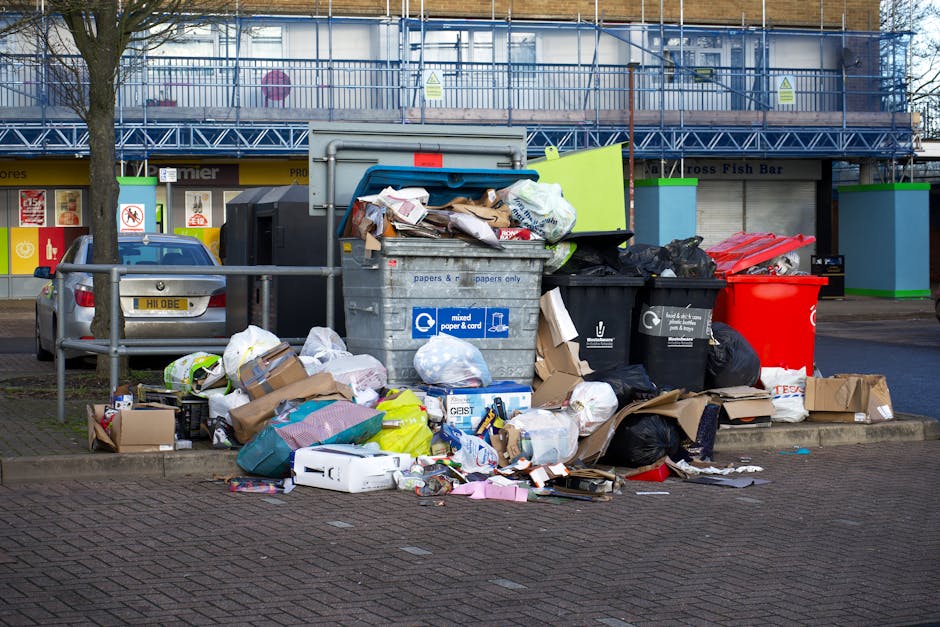
Hidden fees to avoid in Battersea rubbish removal quotes
Posted on 28/08/2026

If you have ever stared at a rubbish removal quote and thought, "That seems fair enough... but what am I actually paying for?", you are not alone. Hidden fees to avoid in Battersea rubbish removal quotes are often the difference between a smooth clearance and a nasty little surprise on the day. In Battersea, where flats, terraces, garden clear-outs and business premises can all throw up different access issues, a quote that looks cheap at first glance can swell fast if the provider is vague.
This guide breaks down the charges to watch for, how honest quoting usually works, and the simple checks that help you compare providers properly. We will keep it practical, local, and straight to the point, because let's face it, nobody wants to argue about "extra labour" while a van is waiting outside.
Why hidden fees matter
A quote is only useful if it reflects the real job. In rubbish removal, that means the volume of waste, the type of waste, access to the property, loading time, and disposal requirements. If any of those are glossed over, the final bill can creep upward. Sometimes the increase is minor. Sometimes it is a proper headache.
In Battersea, hidden fees matter even more because the area has a mix of basement flats, mansion blocks, tight mews access, permit-controlled streets, and busy roads. A provider who has not asked the right questions may quote for a simple kerbside collection when you actually need stair carrying from a third-floor flat. That difference is not small. It changes the labour, time and vehicle logistics.
There is also a trust issue. Transparent pricing tells you a company understands the job and respects your time. Vague pricing can mean poor planning, poor communication, or worse, a quote designed to look good on search results but not in real life. If you want a broader sense of how the company presents itself, it is worth reading pages like pricing and quotes explained clearly and the services overview before you commit.
Expert summary: the cheapest rubbish removal quote is not always the best value. A better quote is the one that states what is included, what is excluded, and what could change the price before anyone arrives.
How rubbish removal quotes usually work
Most rubbish removal quotes are based on a mix of estimate and inspection. For smaller jobs, a provider may price from photos, a short description, or a quick phone call. For bigger jobs, especially house clearances, builders waste, office clear-outs or bulky furniture, they may need more detail. The more precise the information, the less room there is for pricing games later.
In a sensible quote, you should normally see:
- the service being provided
- an idea of the waste volume or load size
- what categories of waste are included
- whether labour, loading and disposal are part of the price
- any conditions that could affect the final amount
- how payments are handled
Hidden fees usually appear when one of those points is missing. A provider might say "from GBPX" but not explain that the price only applies to easy access, mixed waste-free loads, and curbside pickup. Then, on collection day, the quote changes. Not ideal. Not fair, really.
For specific waste types, the pricing logic can change again. For example, white goods, office clearance items, garden waste, or builders waste may each need different handling. If your load includes specialist items, browse the relevant service pages such as white goods and appliance disposal, builders waste disposal, or office clearance in Battersea so you know what kind of detail a proper quote should cover.
Key benefits and practical advantages
Being able to spot hidden charges is not just about saving money on one collection. It helps you compare providers more intelligently, plan the job properly, and avoid stressful last-minute changes. There is a calmness that comes from knowing the price has been thought through. You notice it straight away on moving day or clearance day, when everything is already a bit chaotic.
Here are the main advantages:
- Better budgeting: you know the likely final cost before the van turns up.
- Cleaner comparisons: you can judge one quote against another on a like-for-like basis.
- Fewer disputes: written inclusions reduce the chance of disagreement later.
- Faster service: accurate details mean less time wasted renegotiating on site.
- Better planning: you can prepare access, parking and item sorting in advance.
There is also an environmental angle. Transparent quotes often go hand in hand with more responsible handling of waste. Providers who are organised enough to price accurately are often more organised about recycling, sorting and compliance too. If sustainability matters to you, the company's recycling and sustainability information is worth a look.
Who this is for and when it makes sense
This is for anyone in Battersea who wants rubbish removed without paying over the odds. That includes homeowners clearing a loft, tenants moving out, landlords turning around a property, shop owners clearing stock, and contractors dealing with renovation debris. If the job is small and simple, hidden fees may not be a huge risk. But even then, one awkward staircase or a surprise surcharge can change the equation.
It makes particular sense if you are dealing with:
- bulky furniture or awkward items
- mixed waste from a DIY or refit project
- appliances that may require special handling
- late bookings or same-day removals
- properties with poor lift access or parking constraints
- large clearances where the volume is hard to judge at a glance
Local context matters too. Battersea has plenty of apartments above street level, estate layouts, and restricted loading spaces. That does not mean quotes are always complicated, but it does mean the provider needs to ask sensible questions. If you are arranging a quick collection, a local guide such as same-day rubbish removal near Battersea Power Station can help you understand how fast-turnaround jobs tend to be handled.
Step-by-step guidance
Here is a simple way to protect yourself from hidden charges. It is not fancy, but it works.
- List the waste properly. Write down what you have, not just "a bit of junk". Include furniture, bags, rubble, appliances, garden cuttings and anything else that is going.
- Note the access conditions. Mention stairs, lifts, parking, rear access, long carries, narrow hallways or any gated entry. These details matter more than people think.
- Ask for an itemised quote. A good provider should explain what the base price covers and what might trigger extra cost.
- Check for minimum charges. Some companies charge a minimum load or call-out fee even for tiny jobs. That is not always bad, but it should be clear.
- Confirm waste type rules. Mixed household waste, builders waste and electrical items can be priced differently.
- Ask about labour time. Is loading included? Is there an hourly rate if the job takes longer than expected?
- Ask how parking is handled. In London, waiting time and parking complications can become a sneaky add-on.
- Request the final-price conditions in writing. A text or email is fine, as long as it is clear.
A quick example: if you have three sofas on the second floor, the provider should know that before quoting. Otherwise, the "cheap" quote may assume kerbside loading, and the final amount can jump once the team arrives and sees the stairs. This is exactly the kind of thing people regret not mentioning. Usually about ten minutes too late.
Expert tips for better results
Over time, the same patterns appear again and again. The best way to avoid surprises is to think like the crew arriving on site. What will slow them down? What will require extra handling? What could change the disposal route?
Here are a few practical tips that genuinely help:
- Send photos in good light. A clear phone photo is better than a vague description, especially for mixed waste.
- Separate clearly priced items. Appliances, mattresses, rubble and general waste may be treated differently.
- Ask whether VAT is included. Some quotes look lower because tax is added later.
- Check weekend or evening rates. Out-of-hours collections can carry a premium.
- Be honest about volume. Underestimating is one of the quickest ways to get hit with a revision.
- Confirm whether loading assistance is included. "Collection only" and "full service" are not the same thing.
If your project involves salvageable materials, do not forget the value of keeping useful items aside. A small detour into DIY ideas using salvaged building materials can sometimes help you reduce the load and the bill. That is not always possible, of course, but when it is, the savings are real.
One more thing: ask what happens if the volume is slightly different on arrival. Good providers will explain the adjustment process calmly, not spring it on you like a magic trick. You want clarity, not theatre.

Common mistakes to avoid
The biggest mistake is choosing the lowest headline price without checking the details. It sounds obvious, but people do it all the time because the first quote looks tidy and the rest look "too expensive". In reality, the first one may simply be incomplete.
Other common mistakes include:
- Not mentioning access issues. Even one extra flight of stairs can matter.
- Forgetting special items. Fridges, freezers, mattresses and construction debris can all alter the price.
- Assuming labour is included. Sometimes it is. Sometimes it is only partly included.
- Ignoring parking or waiting time. In Battersea, that can become relevant quickly.
- Not asking about disposal fees. Some providers separate transport from tipping or processing costs.
- Rushing a same-day booking. Speed is convenient, but it can compress the quote process.
There is also a softer mistake: not trusting your instinct when a provider is oddly vague. If someone cannot explain the price in plain English, it usually means the quote is not fully formed yet. And that is not the time to shrug and hope for the best.
Tools, resources and recommendations
You do not need complicated tools to compare quotes properly. A notebook, your phone camera and a few minutes of organisation usually do the job. Still, there are a few resources on the site that can help you understand the scope of service before you ask for a price.
Useful pages to review include:
- about the company for background and approach
- waste carrier licence and compliance for legal handling expectations
- insurance and safety for risk-aware collections
- payment and security for payment reassurance
- terms and conditions for the fine print
If you are planning a broader clearance, these service pages can also help you judge scope: house clearance, loft clearance, furniture removal, furniture disposal, garden waste removal, domestic waste collection, commercial waste removal, and rubbish collection in Battersea.
For readers balancing cost and environmental care, the recycling and sustainability approach gives a useful sense of how responsible disposal is handled. That matters, because the cheapest quote is not much of a bargain if it leaves you unclear about where the waste ends up.
Law, compliance, standards, or best practice
Rubbish removal is not just a pricing issue. It is also a compliance issue. In the UK, waste must be handled by a legitimate carrier, and customers should be careful about who they hire. If a provider cannot show that they are properly set up to carry and dispose of waste, the risk is not only financial. It can become your problem too, especially if waste is dumped irresponsibly.
Best practice here is straightforward:
- use a reputable waste carrier
- ask how waste is sorted and disposed of
- keep your quote and receipt
- clarify what is included before work starts
- avoid informal cash-only arrangements that offer no paperwork
It is also sensible to read the small print around cancellations, waiting time, access problems and special waste categories. That is where surprise fees often hide, tucked into a sentence that nobody reads because the sun is out and the van is already outside. Human nature, really.
If you are managing a property or business clearance, compliance becomes even more important. Landlords, office managers and contractors often need a clear paper trail. A service page like office clearance Battersea or Queenstown Road estate clearance guide for landlords can be useful for understanding how a structured clearance should be approached. Likewise, if your job involves more specialist waste, pages such as builders waste disposal and appliance disposal are worth checking so you can match the quote to the job.
Options, methods, or comparison table
Here is a simple comparison of common quoting approaches. It should help you spot where fees tend to appear.
| Quote type | How it works | Strength | Common hidden-fee risk |
|---|---|---|---|
| Photo-based estimate | You send pictures and get a price range or fixed quote | Quick and convenient | Unexpected access or item-type charges if photos are incomplete |
| Phone estimate | You describe the job verbally and get a price | Fast for straightforward collections | Missing details can lead to revisions on arrival |
| Site visit quote | Someone assesses the waste in person before pricing | Usually the most accurate | May take longer to arrange, though the risk of surprise fees is lower |
| "From" price | A starting price with conditions attached | Can be useful as a rough guide | Very easy for add-ons to appear later if conditions are not spelled out |
If you are comparing providers, the best question is not "which is cheapest?" It is "which quote is clearest?" That one question cuts through a lot of noise.
Case study or real-world example
Picture a fairly ordinary Battersea job: a flat clearance after a move, with a broken wardrobe, two bookcases, a mattress, bags of mixed household waste and one old washing machine. On paper, it sounds simple enough. But then you add the detail that the flat is on the fourth floor, the lift is out of action, parking is tight, and the washing machine needs special handling. Suddenly the job is not simple at all.
In a rushed quote, those details may be missed. A provider could quote for "general household waste" and not account for the extra labour. The result? A revised price at the kerb, with everyone standing around trying to stay polite in the drizzle. Nobody enjoys that moment.
Now compare that with a better process: photos are sent, floor level is stated, access is explained, and the washing machine is mentioned upfront. The provider can price realistically, the customer knows where they stand, and the collection is done without the awkward back-and-forth. It is a small difference in admin, but it changes the whole experience.
That is the whole point of avoiding hidden fees. The final number should not be a surprise. It should feel justified.
Practical checklist
Use this before you accept any Battersea rubbish removal quote.
- Have I described every item clearly?
- Have I mentioned stairs, lift access, parking and walking distance?
- Does the quote say what is included?
- Does it say what could trigger an extra charge?
- Is VAT included, if applicable?
- Are special items listed separately?
- Is labour included, and for how long?
- Is there a minimum charge or call-out fee?
- Have I checked the terms and conditions?
- Do I understand the payment method and timing?
- Have I asked whether the company is properly licensed and insured?
- Do I have the quote in writing?
If you can tick most of those off, you are already ahead of the game. Seriously, a lot of people never get that far.
Conclusion
Hidden fees to avoid in Battersea rubbish removal quotes are usually not mysterious at all. They are the predictable result of vague descriptions, missing access details, unclear labour terms and rushed pricing. The good news is that you can avoid most of them with a few calm questions and a bit of preparation.
In a place like Battersea, where homes and businesses come in all shapes and sizes, a strong quote should feel specific, fair and easy to understand. If it does not, keep asking. A proper provider will not mind. In fact, they should welcome it.
Get a free quote today and see how much you can save.
And if you are still deciding, take your time. A clear quote and a clear head tend to save money, stress and a fair bit of back-and-forth. That is usually a good day's work.